
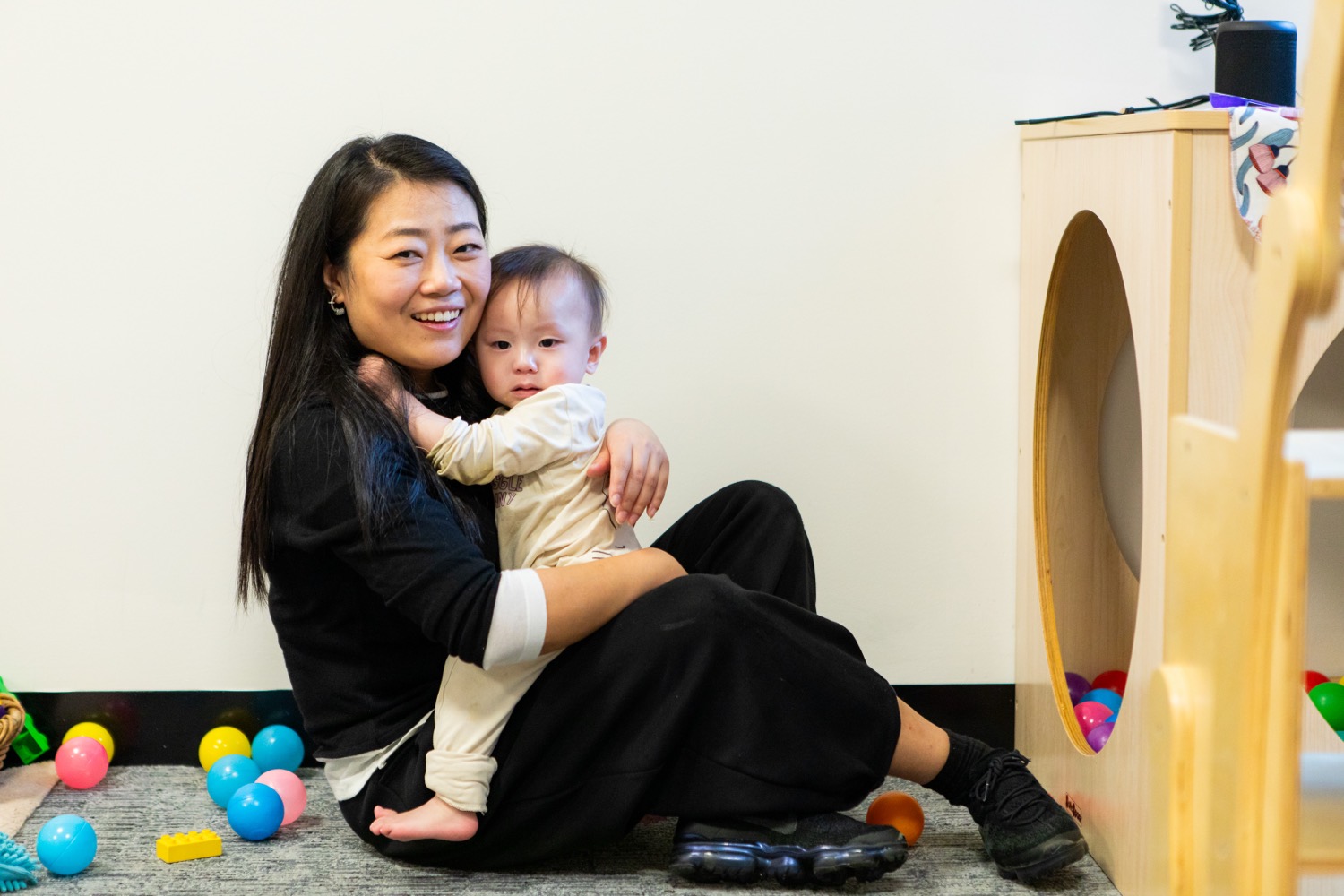
There's a moment in every enrolment decision that no brochure touches: the parent, standing at the door on the first morning, handing their child to a person they met once for four minutes on a tour. Everything about how childcare is marketed pretends this moment isn't the whole game. It is, and parents know it, which is why the question underneath every enquiry is simply: who are these people?
Educator introduction videos answer it. Sixty to ninety seconds, one educator, talking naturally about how they work with children. No production gloss, no corporate framing. Of everything a centre can publish, nothing moves an anxious parent further, faster.
Why the format works on the doubting brain
Familiarity is the raw material of trust, and faces are how humans manufacture it. A parent who has watched your toddler room leader describe how she settles a crying child at drop-off has, neurologically speaking, already met her. On the tour, that parent isn't evaluating a stranger; they're confirming an acquaintance. Directors who use these films consistently describe the same shift: families arrive warmer, ask deeper questions, and decide faster.
The content does specific work too. When an educator explains their approach to a hard drop-off, she's demonstrating competence rather than claiming it, answering the safety question without the parent having to ask, and giving a preview of the daily relationship, because how she talks about children is how she'll talk to that parent at pickup every evening.
What a good one contains
The structure that works is barely a structure: who I am and my room, one real question answered with substance, and one true detail that couldn't belong to anyone else. The educator who mentions that she keeps a photo wall of every child who's graduated her room has said more in one sentence than a paragraph of values statements.
What keeps it credible is what you leave out. No recited qualifications, those belong on the website. No marketing language in the educator's mouth, the moment she says "we offer a nurturing environment" the film is dead. And no pressure toward perfection: a small stumble, left in, reads as a person rather than a production.
The team side: care, consent and a nice surprise
Educators are employees, not props, and the process has to respect that. Participation is invited, never required. Questions are shared beforehand. Each educator approves their own film before it's published, and a film comes down without argument if they leave or change their mind. Filmed by a crew used to early education settings, the experience is low-key: a quiet corner, twenty minutes, a conversation.
Then the surprise: done this way, the films become an internal asset. Educators share them with family. Teams report a lift from seeing their work treated as worth filming. And in a sector where hiring is brutal, candidates watch them too; the same film that convinces a parent convinces an educator deciding between two job offers that yours is a place that values its people visibly.
Where to put them
Room pages on your website, so a family reads about the toddler room and meets its leader in the same scroll. Enquiry follow-up emails, one film, sent the day after the tour of the relevant room, is the placement that works hardest of all. Your Google Business Profile and socials as steady, humane content that isn't asking anyone for anything. Everywhere, the effect compounds with the rest of your trust story: the walkthrough shows the place, the introductions populate it with people.
Starting without overreaching
Two films. Your most natural storyteller and your longest-serving educator. If those two don't change the texture of your next month's enquiries, stop there, you've lost a day. They will, though, and the rest of the team will be asking when it's their turn.
Educator spotlights are one of our core services, filmed inside your normal day by WWCC-cleared crew who work only in early education. If you'd like to see whether they're the right next move for your centre, or whether something else in your enrolment story needs attention first, the free marketing review will tell you honestly.