There's a predictable arc to centre automation projects. Month one is triumphant: enquiries flow into a tidy pipeline, replies fire in minutes, tours book themselves. Month two is quieter: open rates sag, follow-ups feel thin, and the director, reading the sequence as a parent would, notices something uncomfortable. The messages are prompt, polite and empty. The system is a delivery service with nothing to deliver.
We build enrolment systems for a living and we'll say it plainly: the system is the smaller half. What converts a deliberating family is what arrives, and what arrives has to carry evidence, faces, rooms, real families, true answers, or the automation simply distributes your emptiness with impressive efficiency.
Why substance is the binding constraint
Think about what a follow-up message is for. A family in the deliberation fortnight isn't short of contact; they're short of certainty. Every message either adds evidence toward "we'd belong there" or it doesn't. "Just checking in" adds nothing and subtracts a little patience. The educator film adds a person. The walkthrough adds the rooms. The parent story adds proof that a family like theirs made this choice and it worked out. Sequences convert in proportion to the evidence they carry, and no cadence tuning compensates for carrying none.
This is why the generic-CRM route so often disappoints even when competently wired, a pattern we've noted across the DIY comparison: the platform arrives empty of childcare, but more fatally, it arrives empty of you.
Story is a production problem, not a writing trick
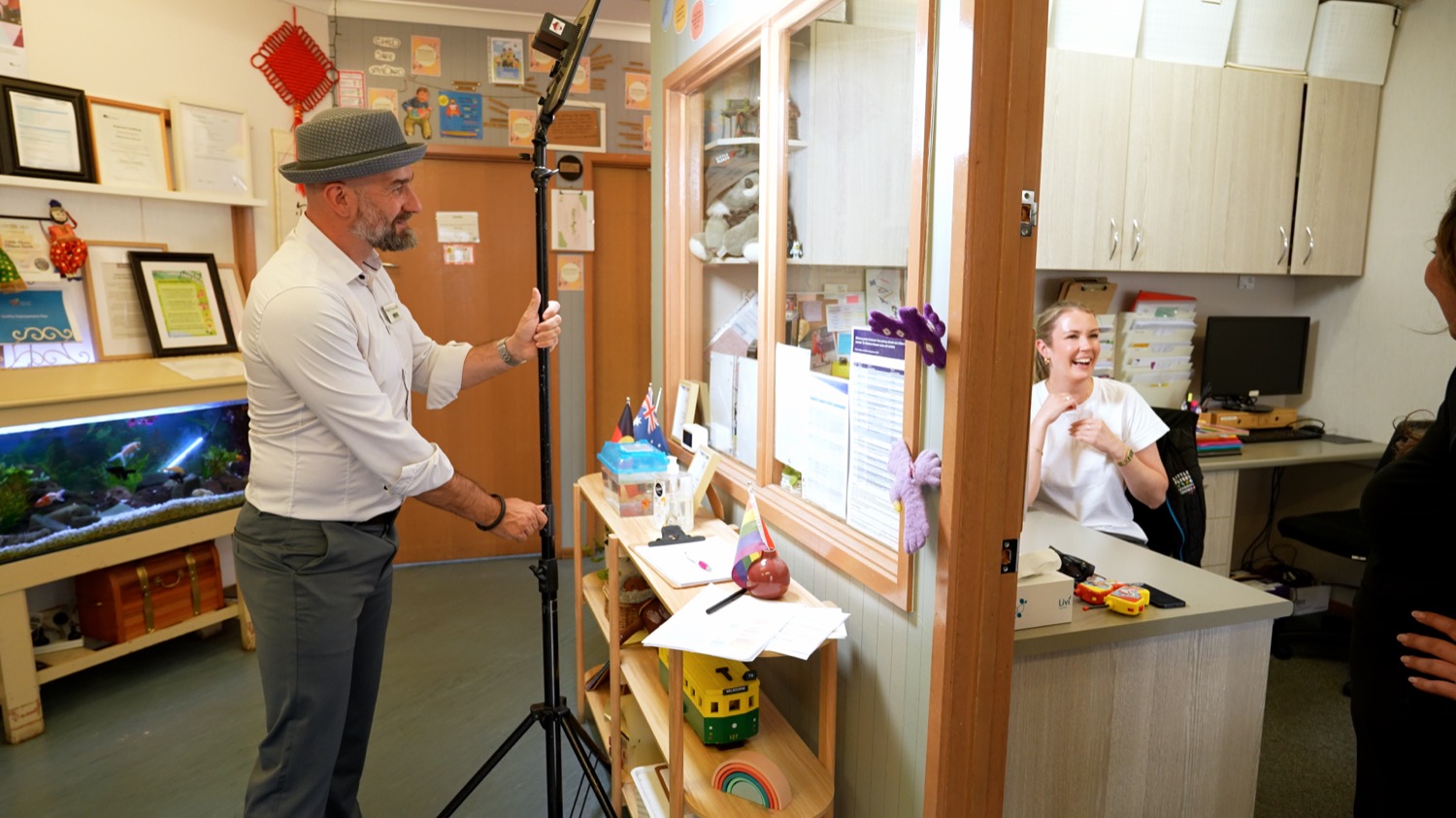
The word "story" gets abused in marketing, so let's be concrete. For a childcare centre, story means: what it looks like to walk in your door (the walkthrough). Who will hold this child at drop-off (the educator films). What a family two suburbs over was worried about and how it went (the parent story). What you honestly say about ratios, settling, food, safety (the written answers). None of that can be typed into existence on a Sunday night; it has to be captured, from your real rooms and real people, with the consent discipline early education demands.
That's the production problem, and it's solvable in about a day of filming when it's planned properly. A dozen durable assets: walkthrough, a few educators, a parent or two, photography. That core is the fuel load for everything the system will send for the next year.
The machine and the fuel, together
Now run the arc again with the fuel on board. The instant reply carries the walkthrough. The pre-tour confirmation carries the film of the rooms the family will see. The deliberation fortnight delivers the educator who'd be their child's educator, then a story from a family like them. The waitlist nurture has something genuinely worth opening each month. Same plumbing as the month-two disappointment version; entirely different effect, because every message now moves certainty.
This pairing is EEVA's whole thesis, and the reason our offer is shaped the way it is: Story (the film, photography and words, produced child-safe by an ECE-only crew) plus Engine (the system that delivers each piece at the right moment), $590 per week plus GST for the complete partnership. One newly enrolled child covers the weekly cost. We built it as one thing because we kept watching centres buy the halves separately and get nothing from either.
If you're not sure which half you're missing, that's the first thing the free Enrolment Story Audit tells you: what your enquiry experience delivers today, where it's silent, and whether your constraint is plumbing or water. 48 hours, no call.