
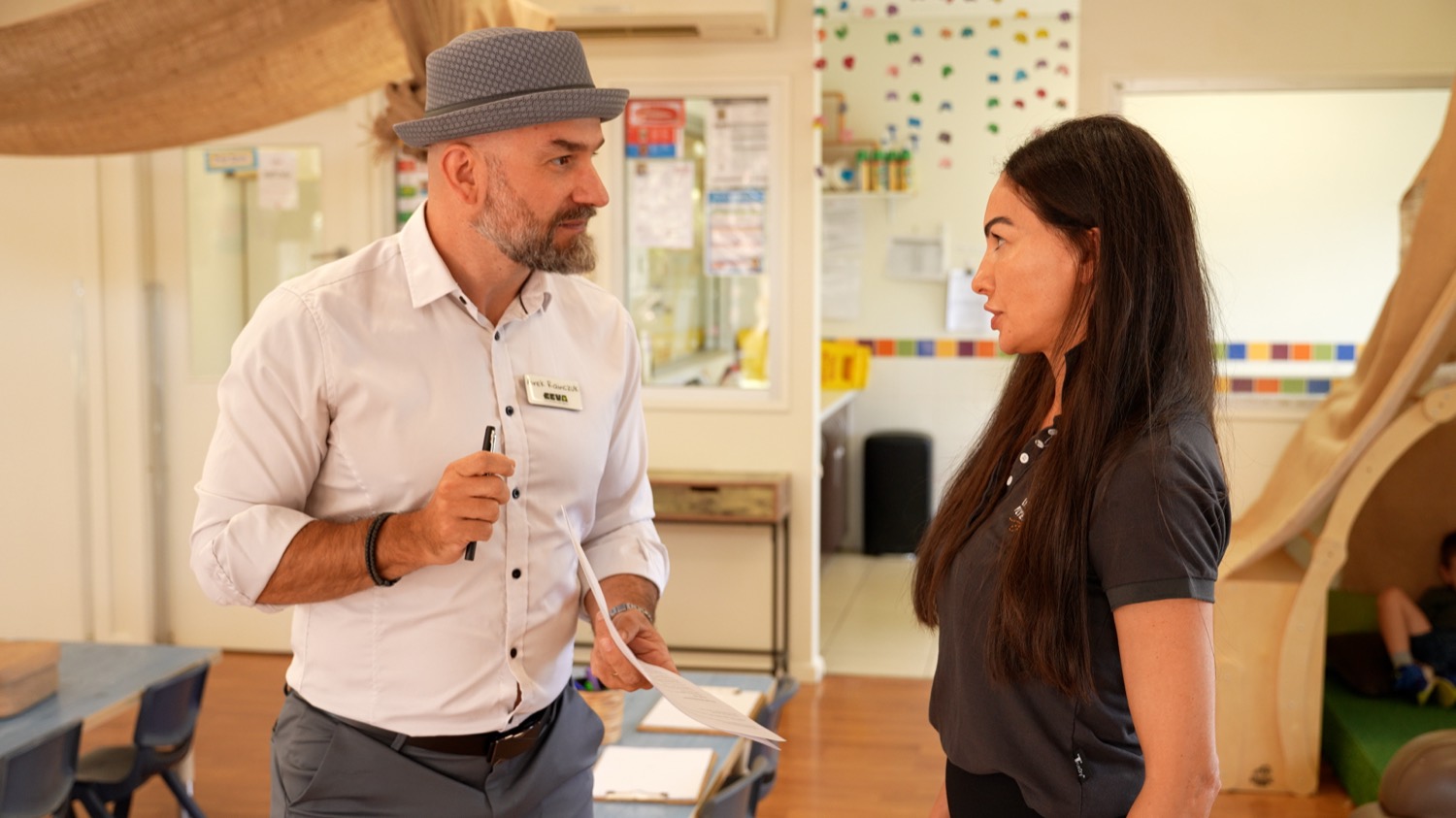
Ask directors what parents raise on tours and you'll hear the same handful: ratios, food, sleep, security. Ask parents afterwards what they were assessing and the list is twice as long, because half of it never gets said. A parent who wonders about staff churn usually won't ask; they'll count how many educators the director greets by name. The unasked questions still get answered, just without your input.
Below is the full list, grouped, with what's behind each question and what answers it best. The theme throughout: specifics beat assurances, and things they can see beat both.
Supervision and staffing
"What are your ratios?" is rarely about the number, which most parents assume is regulated. It's about what happens at the edges: lunch cover, a sick educator, the 5.30pm thin patch. The strong answer describes how the roster absorbs disruption without unfamiliar faces in the room.
"Who will actually be with my child?" is the biggest unasked question on every tour. Parents aren't enrolling with your brand; they're leaving their child with two or three specific humans they haven't met. Names, faces and tenure answer it. This is why educator introduction videos convert the way they do: the parent arrives already knowing the people.
"How long do your staff stay?" gets asked indirectly: "how long has she been here?", "are these the same faces each day?". Long tenure is one of the strongest safety signals you own, and most centres with good tenure never mention it anywhere.
Security and access
"How do you control who comes in?" The entry sequence, sign-in, and how pickup authorisation works, including the awkward case: what happens when someone not on the list arrives. Parents don't want to imagine this scenario for the first time on the tour. A centre that explains its authorisation process unprompted communicates that it has rehearsed the situations that matter.
"Can the children be seen from outside? Who else uses the building?" Sight lines, fencing, shared premises. These get assessed visually and silently. Your job is to make the good answers visible rather than hoping they're noticed.
When something goes wrong
"What happens if my child is hurt?" The parent is listening for a system: first aid, communication ("you'd hear from us before pickup, this is how"), documentation, and follow-up. The word they're listening hardest for is the tone, calm and practised rather than defensive.
"How would I know about problems?" Communication generally: the daily rhythm, the app or the conversation at pickup, and the harder version, how you communicate when the news is bad. Directors who volunteer an example of a difficult conversation handled well answer a question the parent didn't dare ask.
Daily care specifics
Food and allergies, sleep practices, sun and outdoor policy, illness thresholds and exclusion. Individually small, collectively a picture of rigour. These are the easiest questions to answer on your website in a genuinely useful FAQ, which frees tour time for the human questions above, and quietly demonstrates that you have nothing to manage around.
The silent audit
Alongside every spoken question, the parent runs a sensory one: do the children seem settled and engaged, do educators get down to children's level, does the director know every child's name, does the place feel orderly without feeling institutional. You can't script this, and you shouldn't try. What you can do is make sure the first impression doesn't happen at the door. A parent who has watched your walkthrough, met two educators on video and read substantive reviews walks in expecting to like it, and expectation shapes what people see.
Answer before the tour, win before the shortlist
Every question above can be at least half-answered publicly: an honest FAQ, a walkthrough video that shows security and sight lines without labelling them, educators introduced by name, reviews responded to with care. Centres that do this aren't just conversion-optimising the tour. They're often skipping the shortlist round entirely, because the parent who feels answered stops looking.
If you want to know which of these questions your current website leaves hanging, that's precisely what the free Enrolment Story Audit maps, question by question, in 48 hours.