Most directors have seen filming done badly somewhere: a photographer wandering unaccompanied, a crew treating nap time as an inconvenience, a consent question nobody can answer three months later. The result is understandable caution about video altogether, which is a shame, because a properly run shoot is orderly, quiet and built around the children's day rather than against it.
This is what properly run looks like, stage by stage. It's the process we hold ourselves to at EEVA, written down so you can hold any crew to it, including ours.
Three to four weeks out: consent and communication
The shoot is announced to families in plain language: what's being filmed, what it's for, where it will appear, and exactly how to opt their child out. Consent is collected per family, per use. The centre builds two lists from the responses: children cleared to appear, and the non-participation list, which drives the whole shoot plan.
This is also when the crew's paperwork happens. Working with Children Checks for every person attending, verified by the centre, not waved through. Public liability insurance. The crew's own child-safe or safeguarding policy, if they have one. A specialist ECE crew will send all three before you ask.
One week out: the shoot plan
A planning call walks through the day room by room. Which spaces get filmed empty and when. Which educators are being interviewed and what support they'd like. Where the non-participation plan needs specific care, for instance a group that stays in the garden while an adjoining room is filmed. What the day's fixed points are: meals, rest, transitions, and the rule that the schedule bends around them, never the reverse.
The plan gets written down and shared with the room leaders, because a shoot that surprises the educators will show it in the footage.
On the day
The crew signs in like any visitor and gets the same induction: emergency procedures, allergy awareness where relevant, and the house rules. From that point, three rules govern everything.
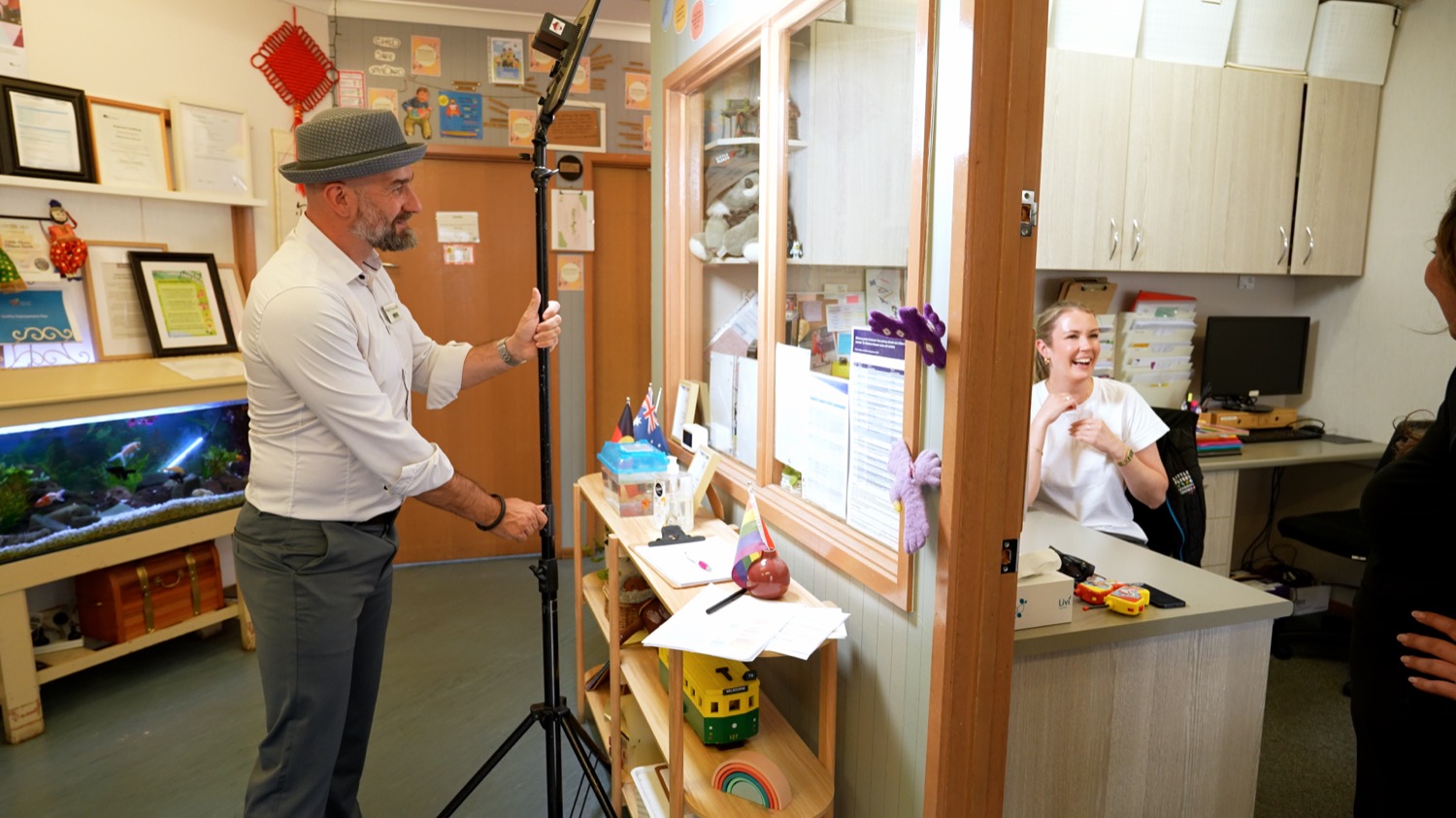
An educator accompanies the crew at all times. Not as a courtesy, as a control. No crew member is ever alone with children, moves between rooms unescorted, or films in a space without a staff member present.
Children's routines win every conflict. If a room transitions to lunch early, the shot waits. If a child is unsettled by the camera, the camera leaves, and that applies to consented children too. Distress overrides paperwork.
Capture happens on production equipment only. No personal phones, no personal cloud accounts. Everything recorded lands in one controlled place, which is what makes the review and deletion commitments after the shoot actually enforceable.
The pleasant surprise for most directors is how calm this all is. Two or three people, moving slowly, filming a room here and an interview there while the day carries on around them.
After the shoot: the second half of consent
Consent doesn't end when the crew packs up. The edit is checked against the non-participation list before anything is delivered. You review every deliverable before it's published anywhere, with the explicit job of catching anything that shouldn't be public. Raw footage is stored securely for an agreed period and then deleted, and that period is written into the agreement. And if a family withdraws consent after publication, there's a defined process for taking content down rather than an awkward negotiation.
Ask any prospective crew how they handle a post-publication withdrawal. The ones who have an immediate, specific answer have done this before. The ones who improvise are telling you something useful too.
The short version
Filming in a centre is a solved problem. Consent collected properly, checks verified, an educator alongside the camera all day, routines protected, and a review gate before anything goes live. Centres that follow this run sheet get strong video without a single compromise on the thing that matters most, and their families can tell the difference.
If you want video made this way, walkthroughs, educator films and photography by a crew that works only in early education, start with our free Enrolment Story Audit and we'll show you what would make the most difference first.