
Centres apply serious rigour to hiring educators, then sometimes book a videographer from a Google search and let them roam with a camera. The inconsistency isn't malice, it's a category error: media crews get filed under "marketing" when they belong under "contractors with access to children". Refile them, and the right checklist follows naturally.
This is that checklist, in booking order. It's also, transparently, the standard we hold ourselves to at EEVA on every shoot, published so you can use it on any crew, including us.
Before you book: four documents, no exceptions
Current Working with Children Checks for every person attending. Not the company, each person, including assistants and second shooters added late. Verify the cards yourself through the state's online check rather than accepting a photocopy as proof.
Public liability insurance. Standard contractor hygiene, and its absence tells you about the operation's general seriousness.
Their own child-safe or safeguarding commitment. A crew that works in education should be able to show you, in writing, how they approach working around children: supervision expectations, conduct standards, how they handle consent limits. It needn't be long. It needs to exist before you asked.
References from education settings. One phone call to another director who's had this crew in their rooms is worth more than a showreel. Ask specifically how the crew behaved around children, not how the video turned out.
Before the day: the operational handshake
A professional shoot is planned like an excursion, in reverse. The crew receives your non-participation list, the children who must not appear, and walks you through how the plan avoids them: scheduling, framing, room sequencing. The day's schedule is built around your routines, with meals, sleep and transitions as fixed points the filming bends around. Room leaders are briefed so nobody is surprised by a camera. And the crew confirms its equipment protocol: capture on production gear only, nothing on personal phones, footage into a controlled store.
If you're running the shoot with a full consent process, our separate guide to filming days covers that end in detail; this checklist is the crew-facing half of the same discipline.
On the day: three rules with no flexible version
Signed in and inducted like any visitor. Emergency procedures, house rules, and where they may and may not go.
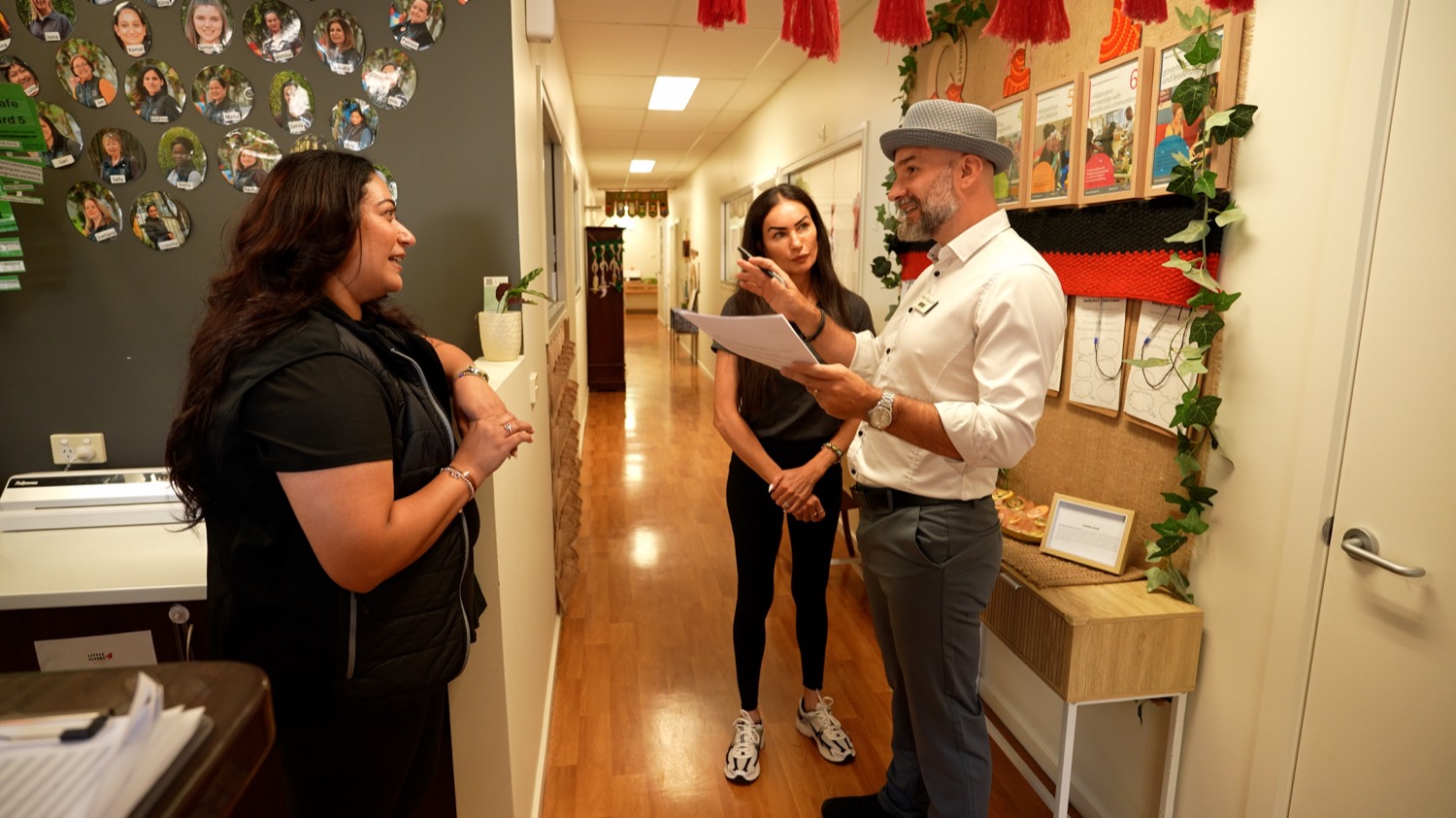
Accompanied always. An educator or senior staff member stays with the crew for the entire visit. No unaccompanied movement between rooms, no solo wandering to "grab one more shot", and under no circumstances any crew member alone with a child. A professional crew doesn't test this rule; they rely on it, because it protects them too.
Children set the limits. A child who turns away from the camera, camera goes elsewhere, consent form notwithstanding. Crew who work in early education read these cues without being told. Crews who don't are in the wrong sector.
After the day: custody of the images
The relationship doesn't end at pack-down. Your agreement should already have settled: a review gate, you approve everything before it appears anywhere; storage, where raw material lives, who can access it, and the deletion date; and the withdrawal path, what happens, mechanically, when a family revokes consent for published content. Get all three in writing before the shoot, because afterwards you have no bargaining position and, with the wrong operator, no answers.
The red flags that should end a booking
Any resistance to accompaniment, however charmingly phrased. WWCC "left at home" or promised for later. Visible improvisation on consent questions, if you know their answer is being composed in real time, they've never had a real process. Pressure to move children or interrupt routines for a shot. And the tell that summarises the rest: a crew for whom your questions are clearly the first of their kind. The right crew has heard every item on this page before, because the right crew brought most of them up first.
None of this makes shoots harder. It makes them boring, in the best sense: a calm day, a crew that knows where the lines are, and content you can publish without a single misgiving. That's the entire point of working with people who only do this in early education, and it's the standard your families would choose for you if they were in the room when you booked.