
Ask an educator why they left their last centre and the answers rarely mention pay first: it's the unsupported room, the leadership that never appeared, the culture that existed only in the ad. Ask why they joined it and you hear the mirror image, promises that a job ad made and a workplace didn't keep. The sector's churn runs substantially on this information gap: candidates commit to workplaces they've never truly seen.
A recruitment video attacks the gap directly. It's the pre-application tour: rooms, people, pace and leadership, on screen, before anyone invests an interview in the wrong fit.
Why it works on candidates specifically
Three mechanisms. Verification: in a market where every ad claims "supportive team environment", showing is the only claim that can't be copy-pasted, footage of the actual team in the actual rooms is unfakeable in a way adjectives never are. Self-selection: an honest video attracts the educators who want what you actually are and quietly deflects the ones who don't, which saves interview rounds and, more valuably, prevents the expensive mis-hires who leave at month four. Familiarity: exactly as educator introduction films work on anxious parents, a candidate who has watched your director and team speak arrives at interview already partway into the relationship, and candidates weighing multiple offers weigh the knowable workplace over the mystery.
What belongs in the frame
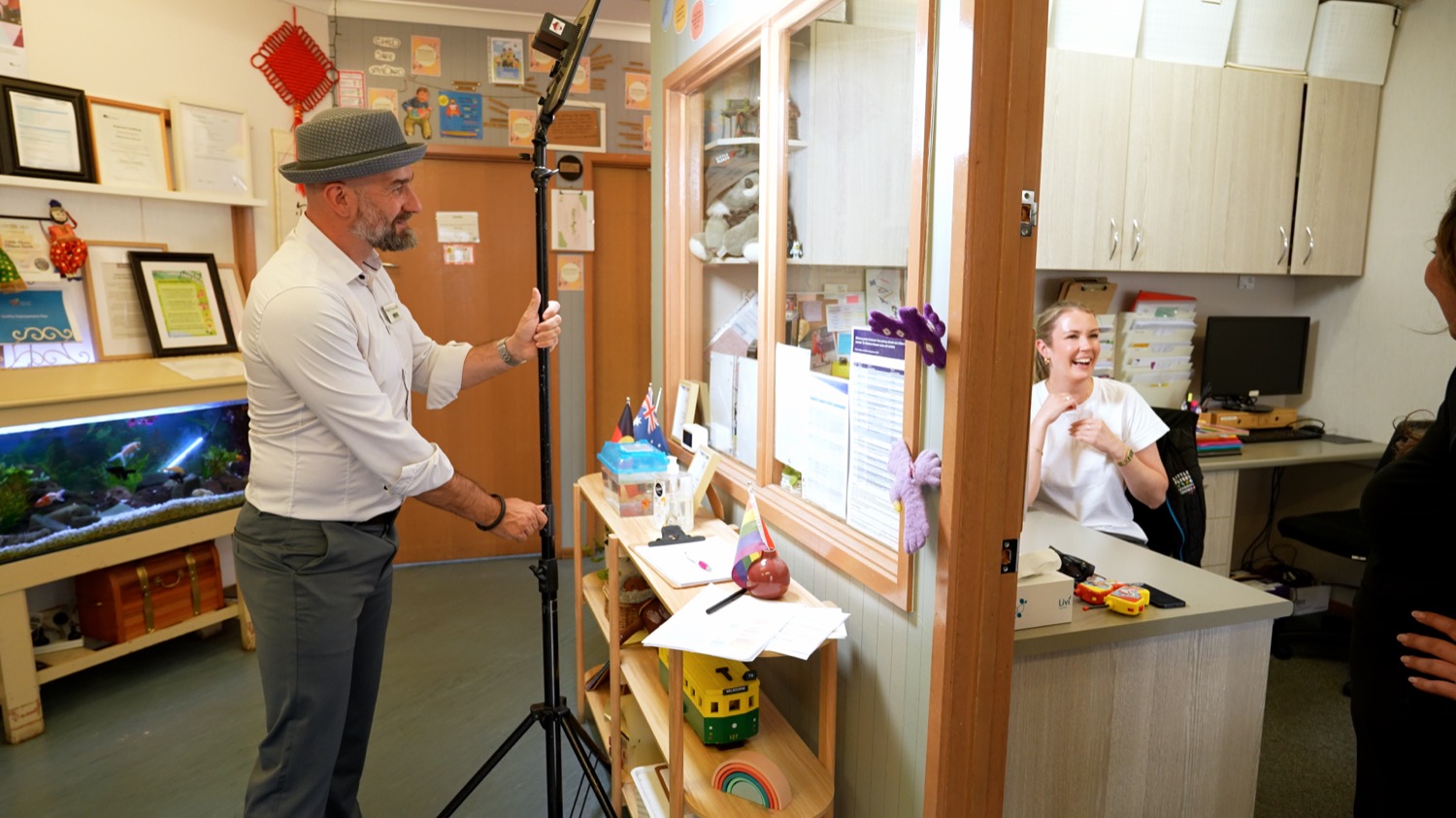
The strong recruitment video is a workplace documentary in miniature, and its cast list matters more than its shot list. The director, on camera, stating what they offer and stand for, candidates are choosing a leader as much as a job. One or two educators, talking naturally about a real day, the same non-performance handling that makes parent films work. The rooms in honest use, including the staff spaces the parent video never shows: where planning happens, where lunch gets eaten, the texture of the working environment.
And the conditions, said aloud: above-award if true, planning time, PD support, the roster philosophy. Centres flinch at putting conditions on camera; candidates read the flinch. If the conditions are good, stating them plainly is the cheapest differentiation in the sector, most ads say nothing checkable at all.
The economics, which are almost unfair
Cost one agency placement fee, or a few months of a room capped by unfilled positions, against a video asset that works for years across every role you post. The maths sits alongside enrolment video economics but steeper, because staffing gaps cap revenue at the room level, and because the same shoot day yields both: our recruitment films are typically produced within the same child-safe production day as the parent-facing set, the crew, consent process and craft identical, the edit pointed at a second audience. One day, two funnels fed.
Doing it without doing it badly
The failure modes are the parent-video failure modes wearing a lanyard: over-staging (a rehearsed "spontaneous" staff room reads instantly), the anthem edit (drone shots and inspirational piano tell candidates the video was made about them, not for them), and pressganged appearances, every on-camera educator a volunteer, same consent dignity the media-crew checklist demands, because a reluctant face on screen communicates precisely the culture you're claiming not to have.
If staffing is the constraint on your rooms, the recruitment film belongs near the top of your asset list, and if you're unsure whether your presence is losing candidates before they ever apply, the free Enrolment Story Audit reads it the way a candidate does, alongside the parent view, in 48 hours, no call.