
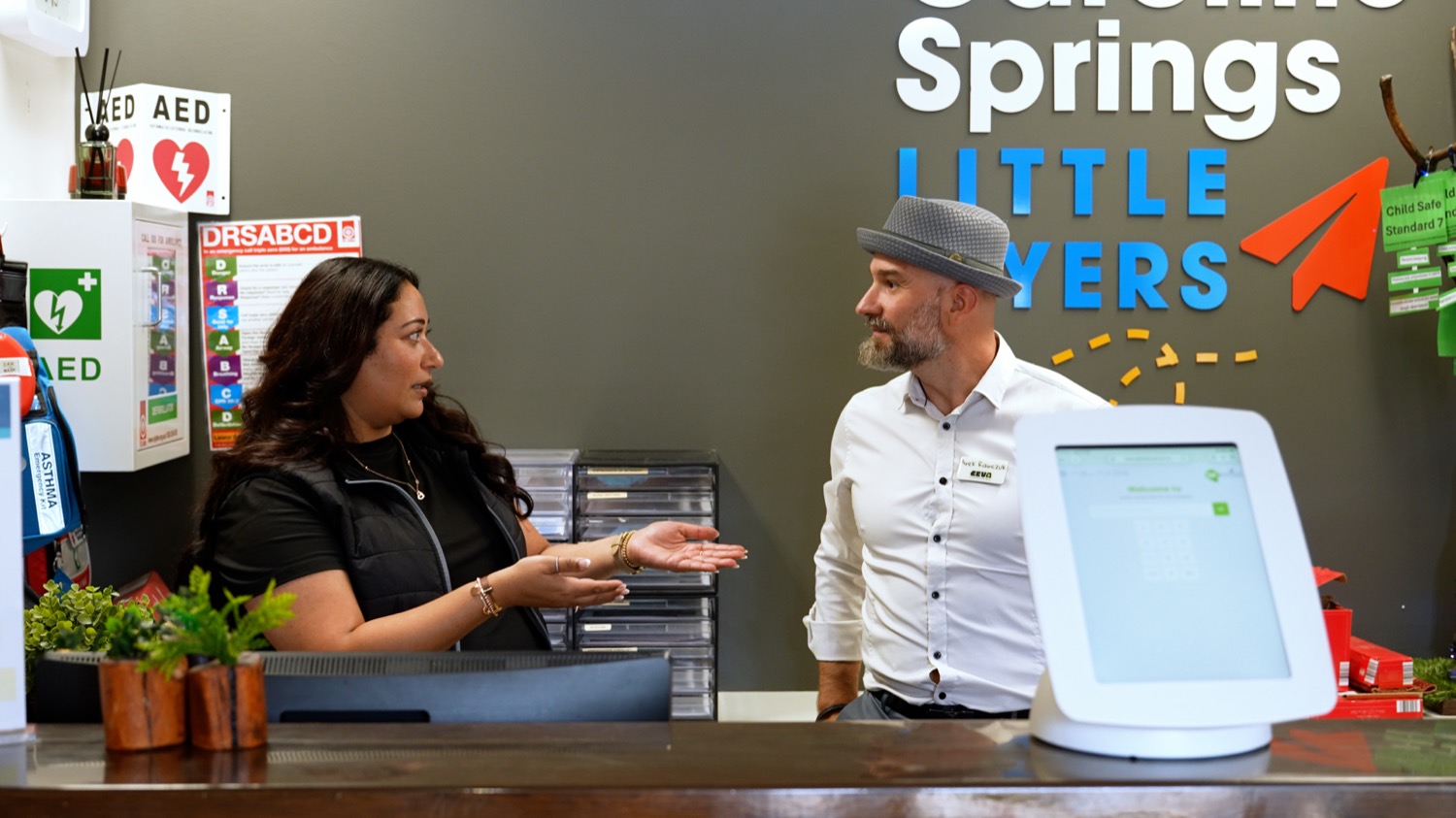
A director experiences enrolment as weather: some weeks it rains enquiries, some months are drought. But from the family's side, the process has a consistent shape. Naming its stages does something useful to a business: it turns "we need more enrolments" (unactionable) into "we lose families between tour and decision" (fixable this month).
The six stages, and the leak at each one.
Stage 1: Search
It starts at night, on a phone: "childcare near me", a suburb search, a scroll through Google Maps, questions typed into ChatGPT. The family builds a longlist you never see. The leak: centres invisible at this stage aren't losing enquiries, they're losing existence; you can't be shortlisted from a search you don't appear in. Search visibility, reviews and a substantial Google Business Profile decide this stage before your website loads. Our guide on how parents judge safety online covers what they're weighing as they scroll.
Stage 2: Evaluation
The longlist becomes a shortlist of two or three. This happens on your website and socials: rooms, faces, reviews, video if you have it, prices if you're brave enough to publish context. The leak: stock photography, no named humans, and no video give the family nothing to attach to. Evaluation is a feelings stage wearing a research costume; the centre that feels knowable wins the shortlist spot.
Stage 3: Enquiry
A form, a call, a message. The family has raised a hand, and the clock starts. The leak is speed, and it's brutal: the family that enquired with you enquired with two other centres in the same sitting. First substantive response tends to frame the comparison. We've given this stage its own guide, because it's the highest-return hour in the whole funnel.
Stage 4: Tour
The visit. Mostly decided by humans, not systems, but systems fill or empty the calendar. The leaks: phone tag that never converts the enquiry into a booked time (solved by online tour booking); no-shows from unreminded bookings; and untrained tour moments, covered from the parent's side in the safety questions parents bring.
Stage 5: Decision
The quiet fortnight. The family compares, deliberates, discusses over dinner. Most centres do exactly nothing during it. The leak: silence reads as indifference, and the competitor who follows up warmly twice during the deliberation looks like the centre that wants the child. A thank-you the same day, something substantive a few days later (the room's educator introduction video is the strongest send there is), and one honest check-in. Not pressure; presence.
Stage 6: Enrolment, and the funnel's second life
Paperwork, start date, transition visits. The family crosses into your management platform's world. The funnel's job isn't quite done though: a happy new family is at peak willingness to leave the review that feeds Stage 1 for the next family. Centres that ask, gently and at the right moment, compound; centres that don't stay flat. That loop is the subject of our review systems guide.
The funnel as a system rather than a hope
Written down like this, the funnel is just a list of moments where someone must act: answer, offer times, remind, follow up, check in, ask. The failure mode isn't ignorance, every director nods at this list, it's that the acting depends on the busiest person in the building remembering. That's the case for running the funnel on a system that captures every enquiry, prompts every next step and never has a sick day. It's precisely what our Enrolment Content Engine does for centres, stage for stage, with the numbers visible (which numbers, exactly).
If you want your own funnel mapped, leaks marked, the free Enrolment Story Audit does it from your public presence and enquiry flow, returned within 48 hours.