
Industry News & Shifts · ECEC Strategy
Google, reviews and now AI: where families actually find your centre in 2026
A parent hears about your centre at a weekend barbecue. A friend mentions the lovely educator in the toddler room, the garden out the back, how settled their little one seems. That night, once the kids are down, the parent picks up their phone and searches your centre's name. What they find in the next ten minutes decides whether they book a tour or quietly move on to the centre their other friend mentioned.
Word of mouth is still the most powerful thing you have. It always will be. What's changed is that word of mouth now gets checked online before anyone calls you. American data from the childcare marketplace Winnie puts it plainly: roughly nine in ten parents start their childcare search online. The barbecue creates the interest. The screen decides what happens next.
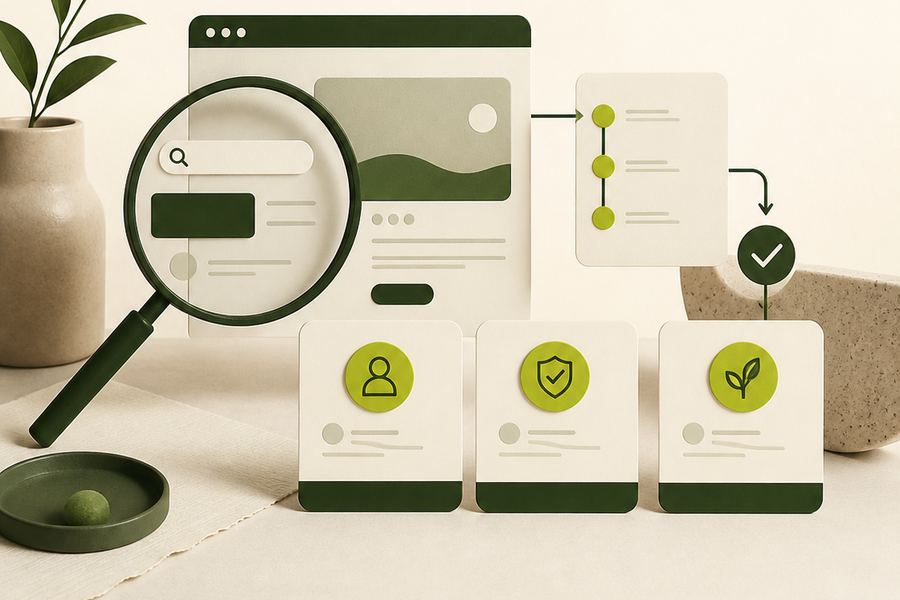
That check now happens across three separate layers, and being strong on one doesn't cover the other two.
Layer one: Google and your Business Profile
When a parent searches your name, or types "childcare near [suburb]", Google decides what to show. Two things do most of the work: the ordinary search results, and the map with its little pins and cards down the side. Your Google Business Profile feeds both.
Most centres set theirs up years ago and never touched it again. The hours are wrong after a public holiday change. The photos are three carpets ago. The category might just say "school" instead of "child care centre". None of that is dramatic on its own, and all of it quietly costs you.
The fix isn't clever, it's just diligence. Claim the profile if you haven't. Get the name, address, phone and hours exactly right, and matching what's on your website to the letter. Choose the most accurate categories. Add real, recent photos of your rooms and garden, not stock images. Write a description in plain language that says who you're for and what makes the place what it is. This is the free groundwork, and it's genuinely neglected across the sector. If you want to go deeper on this layer, our guide on how families find centres online breaks it down step by step.
Layer two: reviews, and the honesty that makes them work
Once a parent has found you, they read your reviews. And they don't read them the way you'd hope. Analyses of childcare review patterns show most parents go looking for the negative ones first. They want to know the worst thing a stranger has said about you, then judge how you handled it.
That single behaviour should change how you think about reviews entirely. A calm, honest owner response to a critical review persuades more than another five-star rating sitting in the pile. When a parent sees a director reply to a complaint with grace, no defensiveness, a clear account of what changed, that parent learns something no marketing can tell them: how you behave when things go wrong. Responding well is part of the product now, not admin you get to after lunch.
The same analyses point to the strongest trust signal of all. A five-star review that names a long-tenured educator, "Miss Sarah has been in the nursery for six years and my daughter adores her", does more than a dozen generic ones. It signals stability, low turnover, real relationships. That's exactly what an anxious parent of a one-year-old is hunting for.
So ask for reviews, and ask at the natural moments: once a family has settled in, at a milestone, after a warm conversation at pick-up. Never gate them. Review gating means only inviting your happy families to post while quietly steering unhappy ones somewhere private, or publishing only your five-star ratings. It breaches Google's rules, and parents can smell it. A wall of flawless reviews with not one honest wrinkle reads as staged, and the negatives-first parent trusts it less, not more. Honesty is the strategy here, not a compromise on it. Our guide on building a review system that runs itself covers the asking and responding without any of the gating.
Layer three: the AI assistants arriving now
This layer is new, and moving fast. Parents have started asking AI assistants directly for recommendations. "What's the best childcare near Ringwood?" typed into ChatGPT, or read off the AI summary that now sits at the top of a Google search. It's not most parents yet. It's a pattern that's clearly emerging, and it rewards the centres who prepare early.
I'll be careful here, because nobody should overclaim how these systems work under the bonnet. But the pattern is consistent enough to act on. AI systems lean on sources they can treat as structured and trustworthy: government directories, business details that stay consistent everywhere they appear, plain-language answers to real questions, and reviews. Three practical moves follow from that.
First, get your listing right on StartingBlocks.gov.au. That's the government's own family childcare directory, run by ACECQA, and it appears to be exactly the kind of authoritative source AI systems trust. Check your entry is accurate and complete. It's free, and almost nobody in the sector treats it as marketing.
Second, keep your business details identical across every place they appear, your website, Google, StartingBlocks, your social profiles. Same name, same address, same phone, formatted the same way. Inconsistency makes a machine less sure it's talking about one real place.
Third, answer real parent questions on your own website in plain words. Not a brochure. The actual things families ask: how you handle settling in, what a day looks like, your approach to sleep, what happens when a child is unwell. When your site answers those clearly, both parents and AI can find the answer, which means you're the one being quoted. A good childcare centre website does this work quietly in the background.
One more thing worth saying out loud, because it cuts across all three layers. If your service holds an Exceeding rating, say so everywhere. Only 16% of long day care services in Australia hold Exceeding NQS (ACECQA, April 2026). If you're one of them, most of your competitors literally can't make that claim. Put it on your profile, your reviews responses, your website, your StartingBlocks entry.
What video adds across all three
Every layer above gets a parent to the same doorstep: a decision made mostly on text and reassurance. Video is the click that turns a check into a feeling. Reading that your educators are warm is one thing. Watching one crouch to a toddler's eye level, hearing your director speak in their own voice about what safety means to them, that's when a cautious parent exhales.
A short, honest film on your website deepens the Google layer, gives your review responses something to point to, and hands the AI layer real substance to draw on. It doesn't replace the groundwork on any layer. It makes the groundwork land.
Where to start
None of this needs a big budget. It needs a clear picture of where you actually stand on all three layers, and an honest look at the gaps. That's exactly what our free enrolment story audit does: we check your Google presence, your reviews and responses, your directory listings and your website answers, then show you the two or three fixes that'll move the most families from "heard about you" to "booked a tour".
The barbecue is doing its job. Make sure the phone in the parent's hand does too.
Arek Rainczuk
Founder, EEVA